WHAT'S NEW?
Loading...
Showing posts with label News. Show all posts


I talked about the FBI attempting to force Apple to unlock their iPhone for them, but now it seems like the FBI doesn't need that anymore. That's because they've allegedly hacked the encryption on the iPhone themselves, and are already agreeing to help Arkansas prosecutors hack their iPhone as well. While we don't know exactly how the FBI hacked the iPhone, we do know one thing. If it can be done to one, it can be done to them all. Most people aren't against the government having the ability to get into their homes if they're breaking the law (and for probable reason) but this isn't just one phone. Imagine the government making a master key that can unlock every person's house door. What if it got stolen? What if a corrupt official were to use it without probable cause? These kinds of questions are what are being raised about the technique the FBI used to hack the iPhone.

Not only is this bad news for us, but it's also bad news for Apple. Now there is a security issue in their phones, which can cause people to not buy them. This is the government directly getting in the way of free enterprise. If the government keeps this all-access key instead of giving it up to Apple to fix, I can only see Apple retaliating. For a country that is so lucky to have so many tech giants' headquarters reside, it sure is odd that our government is so against technological progress.

Thankfully, the government probably won't have use for this vulnerability for much longer. Since it's almost inevitable that an exploit like this will not stay a secret, it will eventually get leaked and make its way back to Apple. Still, when so many iPhones will stay in evidence, unupdated, it begs the question of just how many iPhones local and federal governments will have access to.

Those who would give up essential Liberty, to purchase a little temporary Safety, deserve neither Liberty nor Safety.  - Benjamin Franklin

Image source: Forbes 

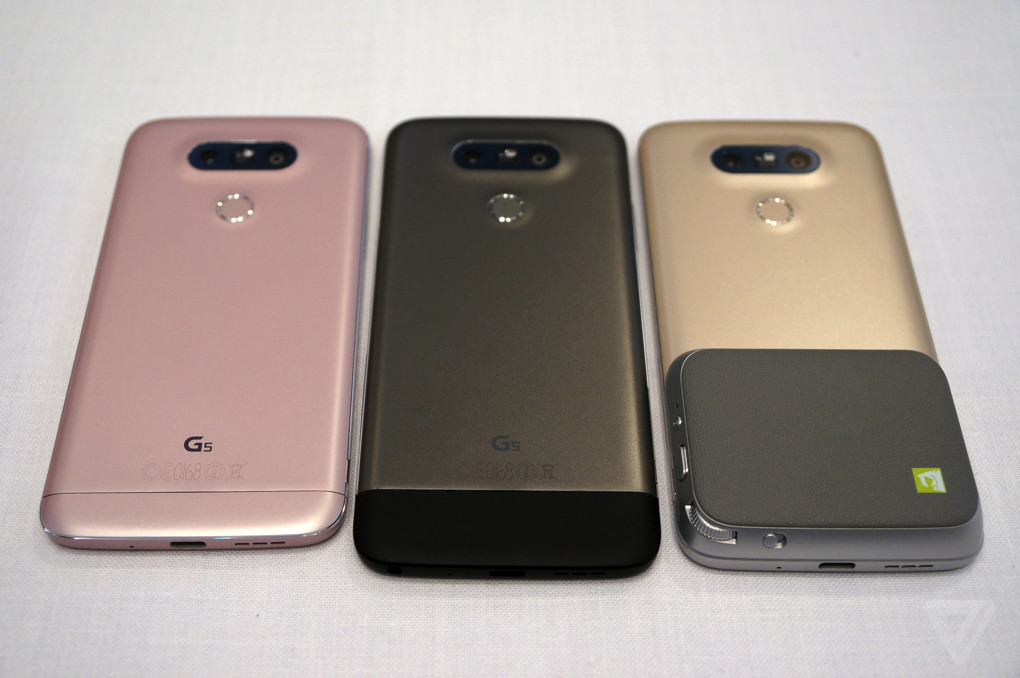
Today, two major companies in the Android smartphone market revealed their flagship devices which will stand as the company's mark on the industry for the next year. I talked about the LG G5's odd rumored changes in a previous post, but now it's official. Both devices have added "always-on" displays, which I think is a fairly nifty feature, but I can't say it's as game changing as I originally thought. I'd be interested to see some battery statistics about it.

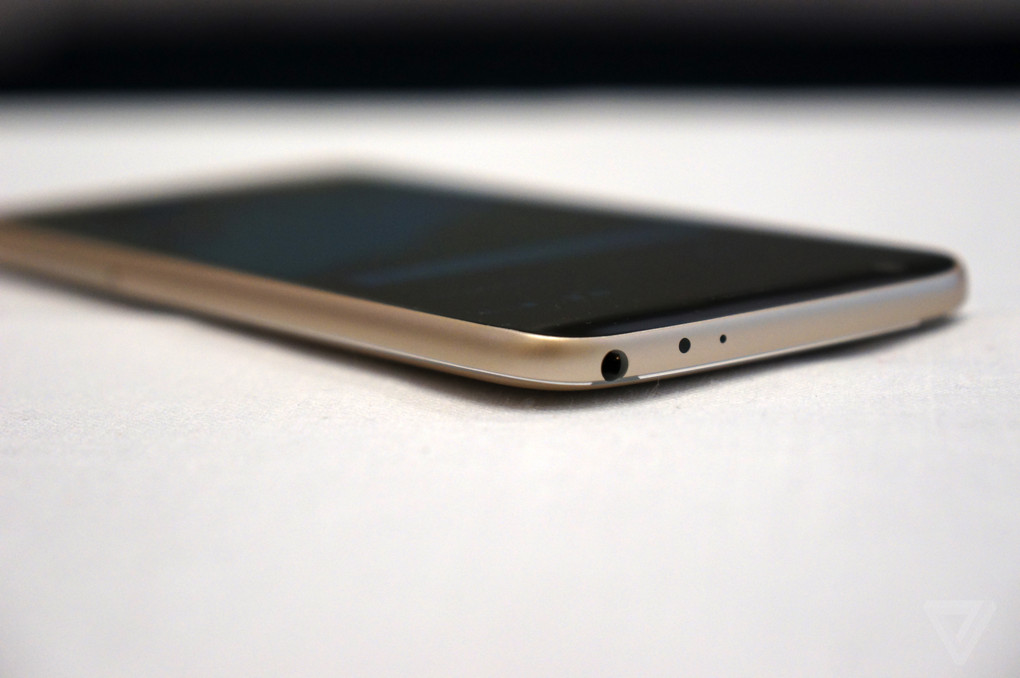
I'll be honest, I think the LG G5 may have focused too heavily on being different and not enough on what people actually want. Sure, its new "modular" slot on the bottom is different and allows for some cool accessories, but the amount of people that will actually use it I think is minimal. There is also a dual-camera design to snap wider-angle pictures, and while that's cool, I'd rather just have a solid camera. Plus, I'm not a fan of its new design. A lot of people are comparing it to a Nexus 6P in terms of design, and I don't think that could be any more wrong. When you look at the 6P, you just see premium. You see the diamond-cut edges and the quality metal. But with the LG G5, it's so smoothed that it doesn't look premium at all. Along with this, the color choices are very odd as there's only lighter color options except for an odd grey-ish one. On the software side, LG has taken a step in the wrong direction. They chose to remove the app drawer in their default launcher because it can "confuse users", which I think it a very odd thing to do. Thinking about it more and more, the LG G5 almost seems like a copy of what many Chinese manufacturers are doing. No app drawer, smoothed surface with odd features. Is it a bad phone? No. I'm sure it's great. But I think LG has shifted their focus on being "different" instead of being good.


There's not too much to talk about with the new Galaxy S7 and Galaxy S7 Edge. In terms of design changes, the only major difference is a slight curve in the back. Besides that, they've added better specs for both devices and they've both been waterproofed. I think the S7 is a solid upgrade to last year, but if you already have the S6, there is absolutely no use upgrading. The devices are so similar I just can't see a point in getting the S7 over the S6.


Sources: The Verge


You must have been living under a rock if you haven't heard about this by now, but just in case Patrick Star is reading this, I'll explain what happened.

Last December there was a terrorist attack in San Bernardino, California. This attack resulted in 14 deaths and 22 injuries. Now, the courts have ruled that Apple has to help the FBI and the United States government hack into the perpetrator's iPhone. Apple has rightfully opposed this ruling, citing the security issues that can and will result from them doing this.

Apple has the capability to do this. Encryption is a word commonly thrown around, but few outside of the tech industry really understand what it means. Encryption is when data, in this case the user data on an iPhone, is scrambled in a way that it becomes unreadable without a specific key. Without the key, it is virtually impossible for anyone but the best hackers to break that encryption. Once the encryption algorithm is broken, any device using the same algorithm can be easily broken as well. What the FBI wants Apple to do is create a custom iOS update that they're going to install on this specific iPhone that will decrypt its data. That's great, right? It's only for one iPhone. Wrong.

With this piece of software that the FBI wants Apple to create, it not only allows the FBI to unlock anyone's iPhone, but it creates a backdoor that anyone will soon be able to access. If that software is leaked in any way, there is no way to tell how widespread it could get. Creating a backdoor is not just leaving it open for one person, it leaves iPhones vulnerable to everyone. When this happens, iPhones become completely insecure. The whole point of computer security is to completely close any gaps in the security. If there's even one gap, it can and will be exploited. Intentionally creating a flaw as large as this one can only have terrible consequences.

I'm not saying that it's not important that this phone doesn't get hacked, but there are a few things to consider. One, it is not Apple's responsibility to provide the FBI with the tools to hack its secure devices. And two, if they do, it will completely destroy Apple's reputation as a company that values security. Because of this, Tim Cook, Apple's CEO, has written a public letter to its customers on this topic of encryption. (Here.) I completely support Apple taking a stand against a court who obviously doesn't understand the repercussions of this order.

The other day Google introduced the ability to stream apps using Google Search. This basically gives you the ability to search for hotels for example, and not only check search results in the Google app, but also see them in a hotels app you don't even have installed. Google does this by running the app on their end and streaming an interactive video to your device of the app.

This isn't only useful for the user, but it helps promote apps that might otherwise be ignored. If you like the app you're streaming, it'd be easy to find it in the Play Store and download it. This supports the developers. Google is making it easier for people to find apps that might be useful to them, and for developers to share their apps through more than just screenshots.

Could this be the first step in a whole new direction for Android apps? I've talked about the possibility of combining Chrome OS and Android, but what if Google was already doing something very Chrome OS-esque with Android, such as making applications not local content, but actually stored in the cloud? Picture your apps working like websites work, you don't actually have this website downloaded on your computer at all times. It's downloaded when you need it and cached if you view it frequently. The same could be done with applications, but less in a video format and more in a website-esque format. Personally, I would love it if Google rolled this out slowly. Start with the ability to "preview" apps on the Play Store, and have them streamed to your device so you can see if you like it and download it. Second, allow the ability to save cloud apps to your device for quick access. Basically like a shortcut to a website. And lastly, have the ability to do this extended to all apps. I'm not saying I want all my apps to be this way. There are certainly benefits to having the app locally on your device. That's why I'd love for this to be an optional feature, maybe having it ask you whether you'd like to "save" it or "install" it.

Google has always been known to focus on cloud storage and shy away from local storage. Chromebooks, for example, rely almost entirely on the internet to access your content. I wouldn't want Android to go this extreme, but I would like it as an option to save storage.

Technology is developing faster now than ever before, increasing speed exponentially. Inventions like the telephone, computers, and the Internet make sharing information quicker and more convenient than ever. This is the definition of collective intelligence, when individuals connect with each other to create a network of intelligence. But this can only take us so far, right? What happens when we create something smarter than us? What happens when machines take over?

First of all, this isn't science fiction. This is happening right now. People program machines that perform specific tasks, mainly in manufacturing. These are taking many people's real jobs right now. CGP Grey made an amazing video talking about the social and economic consequences of machines taking over human labor. To summarize, a robot can take your job no matter what it is. This doesn't necessarily have to be a bad thing, it's just another economic revolution similar to the industrial revolution. There will be problems because we don't know how to deal with it, but we will eventually. The better prepared we are the easier the transition will be.


Many companies are currently working on software that doesn't just perform specific tasks, but actually learns. This is the growing field of artificial intelligence, which aims to create software that gets better over time through learning from its mistakes. Just yesterday Google announced an update to Gmail which can read an email and provide three contextually generated responses to that email. This seems simple at first, but when you consider that this is a machine generating human-like responses to human input, and then learning to get better, it's really incredible.

But at what point does a machine generating a human-like response turn into actual thought and feeling? After all, the human brain is just like one incredibly intricate computer. The Turing Test, proposed by Alan Turing in 1950 aims to answer that question. The test is simple, a human compares the answers of a machine and a human and tries to reliably tell which one is the machine's answer. If the judge cannot reliably tell that one is the machine, it passes the test. So far, no AI has passed the test, but who knows just how much more learning an AI has to do to reach this status? It's inevitable.

The evolution of technology will not stop there. When I say evolution, I don't mean the biological definition. Evolution is extremely slow, taking thousands and thousands of years for there to be a major difference. Technology is advancing much faster than the rate of biological evolution. Eventually there will be the invention of an AI that sees flaws in itself and constantly improves, or creates other copies of itself that also improves themselves. This exponential explosion of AI-powered technological improvement is known as the technological singularity. The intelligence of such machines could grow to such a scale that humans would no longer be able to keep up, and be drowned out by the intense superiority of the constantly improving AI. There's no way to tell what humanity's role in this situation would be. All that's known is that by developing artificial intelligence, this conclusion is inevitable. The only questions are when, and if the AI will see us favorably.

While the chances of all of these happening are high so long as we continue at the rate of progress we're at, there's no telling whether they will be beneficial or not. I, for one, welcome our robot overlords.

Sources: TelegraphCBC, Wikipedia

Nintendo led the revolution in video games with the release of the NES in 1983. Since then, there's been many ups and downs for the company. Lately, however, Nintendo has been falling behind the competition. Xbox and Playstation lead in terms of users and developers. Today Nintendo announced details, albeit very few details, about its upcoming smartphone game. Is this a last resort on Nintendo's part to gain more revenue? Or is it a natural progression? Is it even a bad thing?


I'll start off by saying Nintendo isn't in danger of going out of business any time soon. From years of success the company has built up $10.5 billion in savings. They could take a $257 million loss every year and still be in business until 2075 through selling its intellectual property. But while Nintendo isn't in danger of going out of business, I can't help but want them to succeed.

Now, that isn't to say Nintendo doesn't deserve what it's getting at least a little bit. The Wii U isn't the best for third party developers. Naming it "Wii U" even though it's hardly related to the Wii at all makes it seem like outdated hardware instead of a new console. A lack of users created a lack of developers and ended up making an endless cycle that makes it really hard to want a Wii U. Thankfully, Nintendo does make some awesome games. Splatoon is a title I've been putting tons of hours into since this summer, all because Nintendo continued to update it at a steady rate. One game does not make up for the lack of third party developers, however. Nintendo has also been remaking its old titles lately instead of making new ones, with releases including Wind Waker HD, Ocarina of Time 3D, and Majora's Mask 3D. These kind of releases would be great if they were accompanied by new titles, but they're not. Consistently, at least.

Nintendo's announcement of a smartphone game today is only a natural step now that people aren't buying their consoles. Nintendo makes good games, but releasing them exclusively for their own consoles really limits their market. It may have worked before, but after Xbox and Playstation took over the market, there's no way Nintendo can keep up without major changes. They'll have to really grab developers attention with their next console, but in the meantime, a few apps for platforms people already have will get them some more revenue.

Sources: Wii U Daily, Engadget, Nintendo

Yesterday Google announced a new service related to YouTube and music, called YouTube Red. YouTube Red is $9.99/mo for no ads on YouTube videos across devices, background playback on mobile, and the ability to save videos for viewing offline. What most people who have issue with it think is that $9.99/mo is very steep for what you get. That's understandable, except Google is downplaying the fact that it comes with a subscription to Google Play Music.

Google Play Music is a Spotify and Apple Music competitor I wrote about in my post The Battle of Online Music Streaming. Previously, Google Play Music subscribers had no ads exclusively on verified music videos. Background playback was promised, but it wasn't ever stable. With the introduction of YouTube Red, this only adds more value to Google Play Music. Personally, because I am a Play Music subscriber, I will get YouTube Red for free when it launches. That's incredibly generous of Google to combine them.

Google also announced the launch of the YouTube Music app, which isn't exclusive to Red subscribers. It's basically a YouTube app which is optimized for music and background playback. If you don't have a Red subscription, however, you will see ads before videos and videos will not play in the background.

If you aren't interested in a music service such as Google Play Music, $9.99/mo is definitely too much. Google should have branded YouTube Red and Google Play Music closer together in order to signify what a great deal you're getting having them both, as well as offer the option to get YouTube Red exclusively for a cheaper price. When Google puts them in their own separate packages, you're really only seeing half the deal on each website. It's incredibly bad marketing, but really great for users if you know what a good deal looks like. Hopefully this is just another step into offering a theorized "Google Unlimited" service, which would give access to music, books, videos, and maybe even apps all through a monthly price. While Google hasn't shown plans to unite all of these under one roof, having Play Music and YouTube Red subscriptions mirror each-other shows promise. Here's to hoping in the future Google expands on what Spotify started, with the idea of unlimited entertainment.

Image source: YouTube

In order to understand what a lack of net neutrality can do to society as a whole, I'll have to first explain what it is. To put simply, net neutrality is the concept of Internet service providers treating all content across the web equally. It's what keeps all websites running at nearly the same speed, as long as they keep their servers healthy. Without net neutrality, it's possible for us to see plans like the image I used above. The image is fake, thankfully, but it could be extremely possible if net neutrality isn't enforced.

Verizon and Comcast made headlines in 2014 for requiring Netflix to pay them in order to deliver their service at the same speed as the rest of the Internet. Verizon and Comcast's logic was that since Netflix is taking up so much of their bandwidth, Netflix should pay a fee in order to give it to customers at a fair rate. When you think about it, shouldn't Verizon and Comcast be happy that Netflix is giving them more business? If their customers want faster Internet to watch their Netflix shows, Verizon and Comcast will end up selling more plans, building faster lines, and making this better for everyone! The only problem is, big ISPs don't think that way. They'd rather sacrifice what's best for customers and small businesses in order to make more money. They control the roads that your data is travelling on, so they want to set up toll booths for certain websites. What happens when a Netflix competitor starts up and can't afford to pay ISPs to deliver their content at the same speed as Netflix? They'd lose all their business. Lack of net neutrality creates monopolies across the board.

Thankfully, net neutrality has been a major talking point in politics the past few years. Organizations like Fight for the Future aim to increase awareness and prevent bills violating net neutrality from being passed. Democrats such has Hillary Clinton and Barack Obama have been major supporters of net neutrality, aiming to increase regulation and set up stern rules which would outlaw violations. Unfortunately, not all politicians are in favor of this. Republican Ted Cruz has gone on record against net neutrality. On Facebook he said, "It puts the government in charge of determining Internet pricing, terms of service, and what types of products and services can be delivered, leading to fewer choices, fewer opportunities, and higher prices for consumers,"


Throwing around anti-Democrat buzzwords such as "Obamacare for the Internet" just shows how ignorant he truly is about the subject. The government regulating what ISPs can do isn't going to limit choice or opportunities, it's going to increase them by letting small online businesses grow. Without it, we're going to allow major ISPs to become an even larger monopoly than they already are.


Sources: Time, CNBC, Verge


Android Marshmallow began rolling out yesterday to select Nexus devices, and while most devices won't be getting it right away, if you're an avid Android user it's bound to end up in your hands someday. Consider Android 6.0 a polished Lollipop. It doesn't have any drastic changes to the interface, but it polishes it and adds much needed features.

6. Smarter expandable storage.
SD cards to expand the storage on your device are perfect if you have the chance to use them. Unfortunately, Android handled external and internal storage differently. There was confusion of moving apps to and from external and internal storage, making it extremely difficult to use correctly. Marshmallow introduces Flex Storage, which basically allows your expandable storage to do what it should. Expand on internal storage. It acts just as if you would tack on a few extra gigabytes to your device's storage.

5. App backup and restore.
Lollipop had some great improvements to allow you to pick up a new device and re-download your apps automatically from the last one. Marshmallow takes things a step farther. Android 6.0 automatically backs up your apps as well as their data, and allows you to restore them across devices or ROMs. This means that your high score on your favorite game will be saved, as well as your login details for Twitter.

4. Fingerprint and USB-C support.
Following in the steps of Apple and Samsung, Google has finally embraced the use of fingerprint sensors officially in Android. With this, this opens up fingerprint technology to many manufacturers who don't have the resources to develop their own fingerprint software. Along with this, Google added USB-C support, meaning USB-C cables can now be used officially in Android. USB-C cables are reversible, with much faster connection and charging rates.

3. Permissions overhaul.
Android permissions have had problems since their conception. Why should this calculator app need access to my contacts and camera? Google hopes to address this issue in Android 6.0. Marshmallow lets you edit permissions individually for apps without breaking the whole thing. And until an app explicitly asks to use some permissions—like the camera—through a pop-up, the app will not have access to it. Say goodbye to the days of confusing app permissions!

2. Battery improvements.
Doze and App Standby aim to greatly increase battery life. Doze mode senses when you aren't using your device through a combination of sensors and automatically puts your apps into a deep sleep. You don't miss out on notifications, but this drastically increases standby battery life. App Standby is a per-app setting comparable to the Greenify app. This causes apps that you haven't used in days to automatically be hibernated unless something important wakes them up, or you launch them. If you haven't used Facebook in a week, it probably shouldn't be eating up your battery in the background.

1. Now on Tap.
Just when we thought Google's takeover of Android was slowing down, here we see it escalating. Google Now on Tap allows Google's famous search assistant to read over whatever is on your screen and give you relevant information. So if you get a text asking you if you want to meet at Olive Garden, you can hold your home button and Google will give you reviews, opening times, locations, and more about the nearest Olive Garden to you. Other improvements to Google Now allow other apps to tap into Google voice search and ask follow-up questions. For example, I could say "Ok Google, listen to Spotify." and Google would respond with, "Alright. What would you like to listen to?" assuming Spotify has support for this.

Google has really decided to up its game with useful and original upgrades to Lollipop without drastically changing the experience. I consider Android 6.0 one of the best upgrades Android has had in awhile.

Image source: Android
Google
Google kicked off today with an amazing event centered around hardware. Last year's Nexus event was definitely a disappointment. A giant, 5.9 inch Moto X copy for $649? No way. Fortunately, this year was different. Amazing hardware for a surprisingly fair price is what Google showed today. If you're unfamiliar with Google's Nexus line, the goal of Nexus is to sell devices as Google envisions the Android hardware environment. For example, since Android Marshmallow introduced the use of USB-C, both new Nexus devices this year support this charging technology. The same for fingerprint sensors.

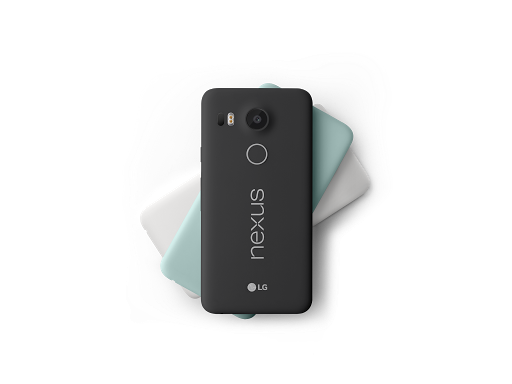
I'll start with the LG Nexus 5X, the sequel to the widely liked LG Nexus 5 in 2013. The 5X has many improvements to the 5, sporting dual front-facing speakers, a 12.3 megapixel camera, and a Snapdragon 808 chip. While these are fantastic for a phone that is only $379 for the cheapest variant, I'm disappointed in general with this device. The 5X only has 2GB of RAM. Compare this to the OnePlus 2's 3GB, or the Asus Zenfone's 4GB for similar prices. And with Android 5.0+'s frequent memory leak issues, this definitely isn't a good thing. Another low point of the 5X is the storage, its lowest price option only having 16GB of storage, and its highest having 32GB, with no micro-SD card slot. Even if you can deal with these, there's still the less than impressive 2,700 mAh battery. The 5X may still be a good option if you're looking for a fairly regularly sized device with stock Android, but I think a price around $320 would have been more fair.


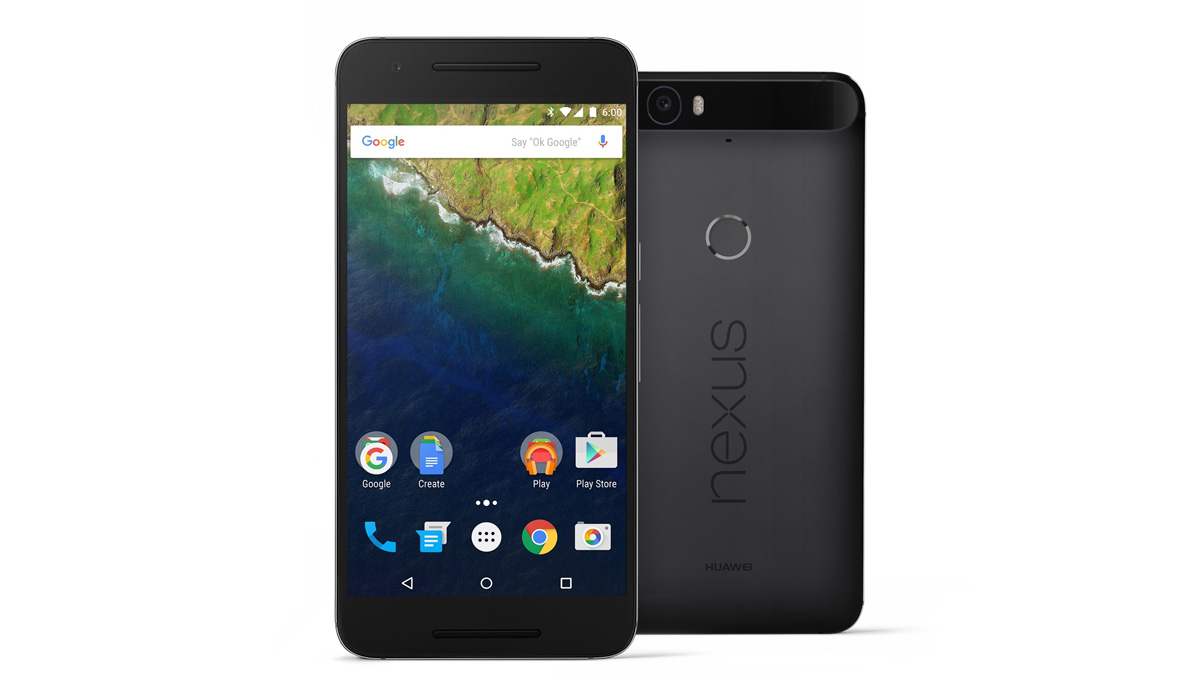
The other Nexus, the Huawei Nexus 6P, stole the show for me. QHD 5.7 inch screen, all-metal body, dual front-facing speakers, Snapdragon 810, 3GB RAM, and a giant 3,450 mAh battery. Absolutely gorgeous. When the specs for this device were leaked a few days ago, I definitely expected it to cost around $649 like last year's Nexus 6. I wouldn't even think that would be a bad price, I just wouldn't buy it. When I found out the 6P will be $499, I was shocked. I'm pretty certain this will be my next phone at this point. Unsurprisingly, lots of people have issue with the large black bar at the top of the back. Android Police reported today that that black bar houses multiple sensors that cannot reach outside of the metal body, so it has a reason. Personally, I don't mind it.


Google also announced that Android Marshmallow will be rolling out to current Nexus devices, oldest being the Nexus 5 starting next week. (Sorry Nexus 4!) Other announcements include a new Google Play Music family plan for $14.99/mo, an upgraded Chromecast for $35 with Spotify support, and the new Pixel C Android tablet.